

You’ve tried pain relievers. You’ve sat through physical therapy sessions. Maybe you’ve even seen a regular chiropractor a few times. But the headaches keep coming back, your neck still feels tight, and nobody can tell you why.
If that sounds familiar, you’re not alone. Thousands of people across Alabama deal with the same frustrating cycle. The good news? There’s a specialized approach that gets to the root of the problem instead of chasing symptoms.
It’s called upper cervical chiropractic care. This gentle, precise method focuses on the top two bones in your spine and their connection to your brain and nervous system.
This guide covers everything you need to know, from how upper cervical care works to what your first visit looks like.
What Is Upper Cervical Chiropractic Care?
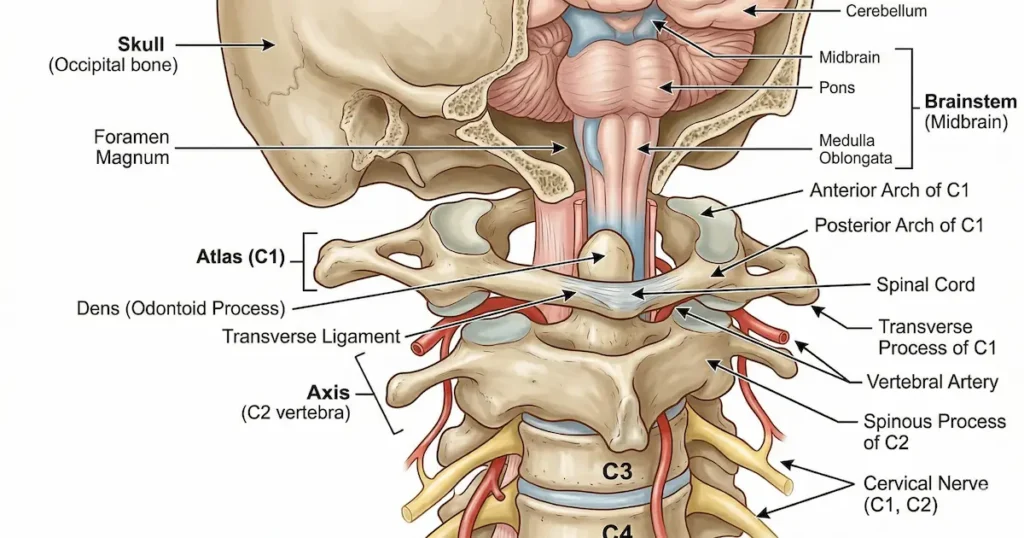
Upper cervical chiropractic care is a specialized branch of chiropractic that focuses on two small but powerful bones at the top of your neck. These bones are called the atlas (C1) and the axis (C2).
They sit right beneath your skull and surround the lower portion of your brainstem. Your brainstem controls vital functions like heart rate, breathing, digestion, and sleep. When C1 or C2 shifts out of its proper position, it can put pressure on the brainstem and interfere with signals traveling between your brain and body.
Unlike general chiropractic that adjusts the full spine with manual twisting and cracking, upper cervical care uses advanced imaging and low-force corrections to realign only C1 and C2. The goal is precision, not force.
How Does the Upper Cervical Spine Affect Your Whole Body?
The Atlas, Axis, and Brainstem Connection
Your atlas (C1) holds up your skull and allows you to nod your head up and down. The axis (C2) sits directly below it and lets you turn your head side to side. Together, these two vertebrae give you more range of motion than any other part of your spine.
That flexibility comes with a tradeoff. The upper cervical region has no interlocking joints or discs like the rest of your spine. This makes C1 and C2 the most vulnerable area of the spinal column. A car accident, sports injury, bad fall, or even years of poor posture can shift them out of alignment.
When that happens, the brainstem gets compressed. Nerve signals slow down or become distorted. Your body compensates by tilting your head, shifting your shoulders, and rotating your hips. What started as a tiny misalignment in the neck can create pain and dysfunction throughout your entire body.
The Vagus Nerve and Full-Body Impact
The vagus nerve is the longest cranial nerve in your body. It runs from the brainstem through the neck and branches out to your heart, lungs, stomach, and intestines. This single nerve controls digestion, inflammation, heart rate, and immune response.
A misalignment in the upper cervical region can irritate or compress the vagus nerve. This explains why some people with neck problems also struggle with acid reflux, anxiety, brain fog, or chronic fatigue. The symptoms seem unrelated, but they trace back to the same source.
Upper Cervical Chiropractic vs. Traditional Chiropractic
People often ask how upper cervical care differs from the chiropractic they already know. Here’s a clear comparison.
| Feature | Upper Cervical Chiropractic | Traditional Chiropractic |
| Focus Area | Atlas (C1) and axis (C2) only | Full spine and joints |
| Adjustment Style | Gentle, low-force correction | Manual manipulation, spinal twisting |
| Sound | No cracking or popping | Often produces audible pop |
| Diagnostic Tools | 3D X-rays, CBCT, thermography | Standard X-rays, physical exam |
| Visit Frequency | Less frequent (correction holds longer) | Typically 2-3 times per week at first |
| Best For | Migraines, vertigo, TMJ, nerve conditions | General back pain, joint stiffness, sports recovery |
Both approaches have real value. Traditional chiropractic works well for general musculoskeletal issues. Upper cervical care goes deeper by targeting the root of nervous system interference at the top of the spine.
What Is the Blair Technique?
The Blair technique is a specialized upper cervical method developed by Dr. William Blair in 1949. It stands apart from other approaches because it accounts for the unique bone structure of each individual patient.
How the Blair Technique Works
Every person has slightly different joint angles at the top of their spine. The Blair method uses precise imaging to map your individual anatomy so the correction fits you, not a generic template.
These images reveal the direction, degree, and nature of your misalignment, so the correction is built specifically for you.
During the adjustment, your Blair chiropractor delivers a quick, light contact to a specific point on the side of your neck. There is no twisting. There is no cracking. Most patients describe it as a gentle tap that takes less than a second.
How Blair Differs from NUCCA and Atlas Orthogonal
Several upper cervical techniques exist, and each one takes a slightly different path to the same goal.
NUCCA (National Upper Cervical Chiropractic Association) uses mathematical formulas and a sustained hand pressure with the patient lying on their side. Atlas Orthogonal uses a percussion instrument to deliver the correction without direct hand contact.
The Blair technique uses a hand-delivered toggle-torque correction based on articular imaging that maps each patient’s unique joint anatomy. Blair’s emphasis on individual anatomical variation makes every adjustment truly personalized, which is why many practitioners consider it the most precise upper cervical method available.
Conditions That Respond to Upper Cervical Care
Upper cervical chiropractic care has helped patients with a wide range of chronic conditions. Because the upper cervical spine affects the entire nervous system, correcting a misalignment here can produce improvements in areas that seem completely unrelated to the neck.
Common conditions that respond well include chronic headaches and migraines, persistent neck pain, vertigo and dizziness, lower back pain, TMJ disorders, post-concussion syndrome, fibromyalgia, high blood pressure, and trigeminal neuralgia.
What the Research Shows
A 2007 study published in the Journal of Human Hypertension found that a single atlas correction produced blood pressure reductions similar to taking two blood pressure medications at once. The study followed 50 patients with diagnosed hypertension and measured significant drops in both systolic and diastolic numbers.
Separate case series published in peer-reviewed journals have documented symptom improvement in patients with Meniere’s disease and chronic vertigo after receiving upper cervical corrections.
Additional research on post-concussion syndrome has shown that patients experienced reduced headache frequency and improved cognitive function following upper cervical care.
The evidence base continues to grow. While results vary from patient to patient, these findings support what practitioners see in clinical practice every day.
Am I a Good Candidate for Upper Cervical Chiropractic?
Signs You Might Benefit from Upper Cervical Care
You don’t need a specific diagnosis to explore upper cervical care. If any of the following sound familiar, a consultation could reveal whether a misalignment is contributing to your symptoms.
Consider scheduling an evaluation if you experience chronic headaches that medications only mask temporarily. Ongoing neck pain or stiffness that started after an accident or injury is another strong signal. Unexplained dizziness, vertigo, or balance problems deserve attention, especially if standard testing has come back normal.
Jaw pain, clicking, or tension that affects eating and speaking can also trace back to the upper cervical spine. The same is true for persistent fatigue, brain fog, or trouble sleeping. Parents who notice posture changes, recurring ear infections, or concentration issues in their children should consider an evaluation as well.
People Who Get the Best Results
Patients who respond best to upper cervical chiropractic typically fall into a few categories. People who have tried other treatments without lasting relief often find their answer here.
Accident and injury survivors, especially those dealing with whiplash or concussions, are strong candidates. Families looking for drug-free care for their children benefit from the gentle approach. Active adults and seniors seeking better balance and mobility also see excellent outcomes.
[If any of these sound familiar, call Functional Chiropractic at (256) 714-6166 to schedule a consultation.]
What to Expect at Your First Upper Cervical Visit
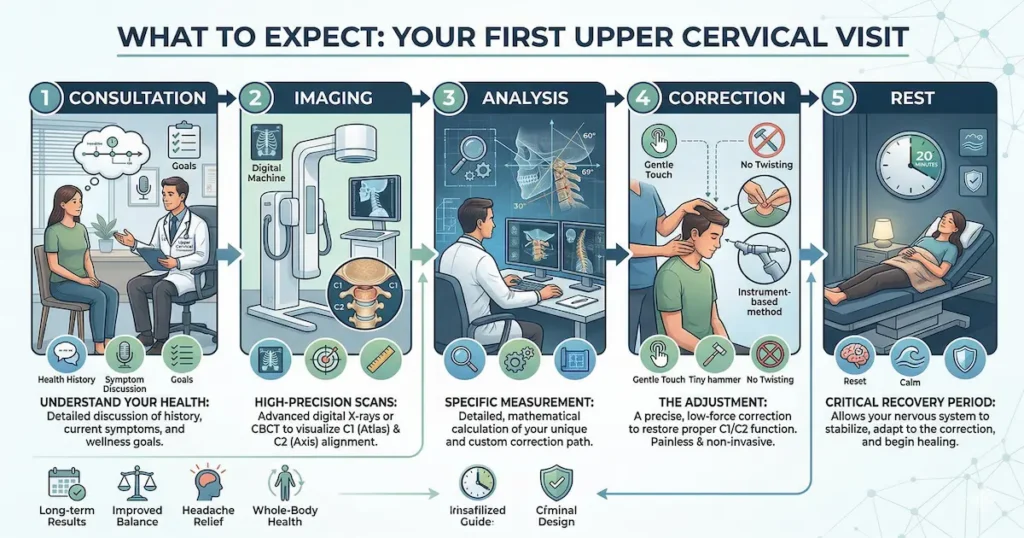
Consultation and Health History
Your first appointment at Functional Chiropractic begins with a thorough conversation. Your doctor will review your symptoms, medical history, past injuries, medications, and health goals. This initial discussion helps identify patterns and pinpoints whether an upper cervical issue may be the underlying cause of your problems.
Diagnostic Imaging and Analysis
Next comes the Blair technique imaging process. Precise X-rays are taken at calculated angles to map your individual upper cervical anatomy. Your doctor analyzes these images to identify the exact type, direction, and degree of misalignment before ever touching your neck. Nothing is guessed. Everything is measured.
Your First Adjustment and Post-Correction Rest
Once the analysis is complete, your doctor delivers a gentle Blair correction. The contact is quick, light, and precise. You’ll then rest on a specially designed table for about 15 to 20 minutes. This resting period allows your nervous system to begin responding to the new alignment.
The entire first visit is unhurried and thorough. You won’t feel rushed, and you’ll leave with a clear understanding of your condition and your care plan going forward.
Common Myths About Upper Cervical Chiropractic Care
Myth 1: They Crack and Twist Your Neck
Fact: Upper cervical adjustments, especially the Blair technique, involve zero twisting, cracking, or popping. The correction is a precise, low-force contact applied at a specific angle. Most patients are surprised by how light it feels.
Myth 2: It’s the Same as Regular Chiropractic
Fact: Upper cervical care is a subspecialty that requires advanced training beyond standard chiropractic education. Practitioners use specialized imaging, detailed biomechanical analysis, and techniques that focus exclusively on C1 and C2. It is a distinct discipline with a different philosophy and toolset.
Myth 3: It Isn’t Safe for Kids or Seniors
Fact: The gentle nature of upper cervical corrections makes this one of the safest chiropractic approaches for children, elderly patients, and people with sensitive health conditions. The low-force method is designed to work with your body, not overpower it.
Myth 4: You Have to Go Forever
Fact: The entire goal of upper cervical care is to get your correction to hold so you need fewer visits, not more. Many patients eventually transition to periodic checkups, similar to visiting a dentist for routine maintenance.
Myth 5: There’s No Scientific Evidence
Fact: Published research supports upper cervical care for hypertension, vertigo, migraines, and post-concussion syndrome. The body of evidence continues to expand through clinical studies and peer-reviewed case series.
How Much Does Upper Cervical Chiropractic Cost?
Initial consultations at most upper cervical offices typically range from $150 to $350, which includes the examination and diagnostic imaging. Follow-up visits usually cost less since the imaging has already been completed.
Call (256) 714-6166 to learn about current pricing and insurance verification at our Huntsville office.
Take the First Step Toward Lasting Relief
Upper cervical chiropractic care offers a gentle, precise, and research-backed path to solving chronic health problems at their source. Instead of masking symptoms, this approach corrects the misalignment that causes them.
At Functional Chiropractic in Huntsville, Alabama, the Blair technique gives you a clear path to relief without drugs, surgery, or forceful neck manipulation. Your body already knows how to heal. Sometimes it just needs the interference removed.
Ready to find out if upper cervical care is right for you? Call your trusted chiropractor in Huntsville today at (256) 714-6166 to schedule your consultation.
Frequently Asked Questions About Upper Cervical Chiropractic Care
Is upper cervical chiropractic care safe?
Yes. Upper cervical adjustments use extremely low force and involve no twisting or cracking of the neck. This makes it one of the safest forms of chiropractic care available for patients of all ages.
Can children receive upper cervical adjustments?
Absolutely. The gentle technique is well suited for children, from infants to teenagers. Kids often respond faster than adults because their bodies haven’t been compensating for as long.
How often will I need to be adjusted?
Visit frequency decreases over time as your correction holds longer. Many patients start with weekly visits and gradually space them out to every few weeks or months.
Will the adjustment hurt?
No. Most patients feel only light pressure or a quick, gentle tap. The Blair correction is designed to be comfortable, not forceful.
How long before I notice results?
Some patients feel improvement after their first correction. Others need several weeks as their body adapts to the new alignment. Chronic conditions that have been present for years may take longer to stabilize.
Does insurance cover upper cervical chiropractic?
Many insurance plans cover chiropractic care, including upper cervical visits. Call Functional Chiropractic at (256) 714-6166 to verify your specific coverage before your first appointment.