
Written and medically reviewed by Dr. R. S. Porter, D.C. · Doctor of Chiropractic · Last reviewed 2026
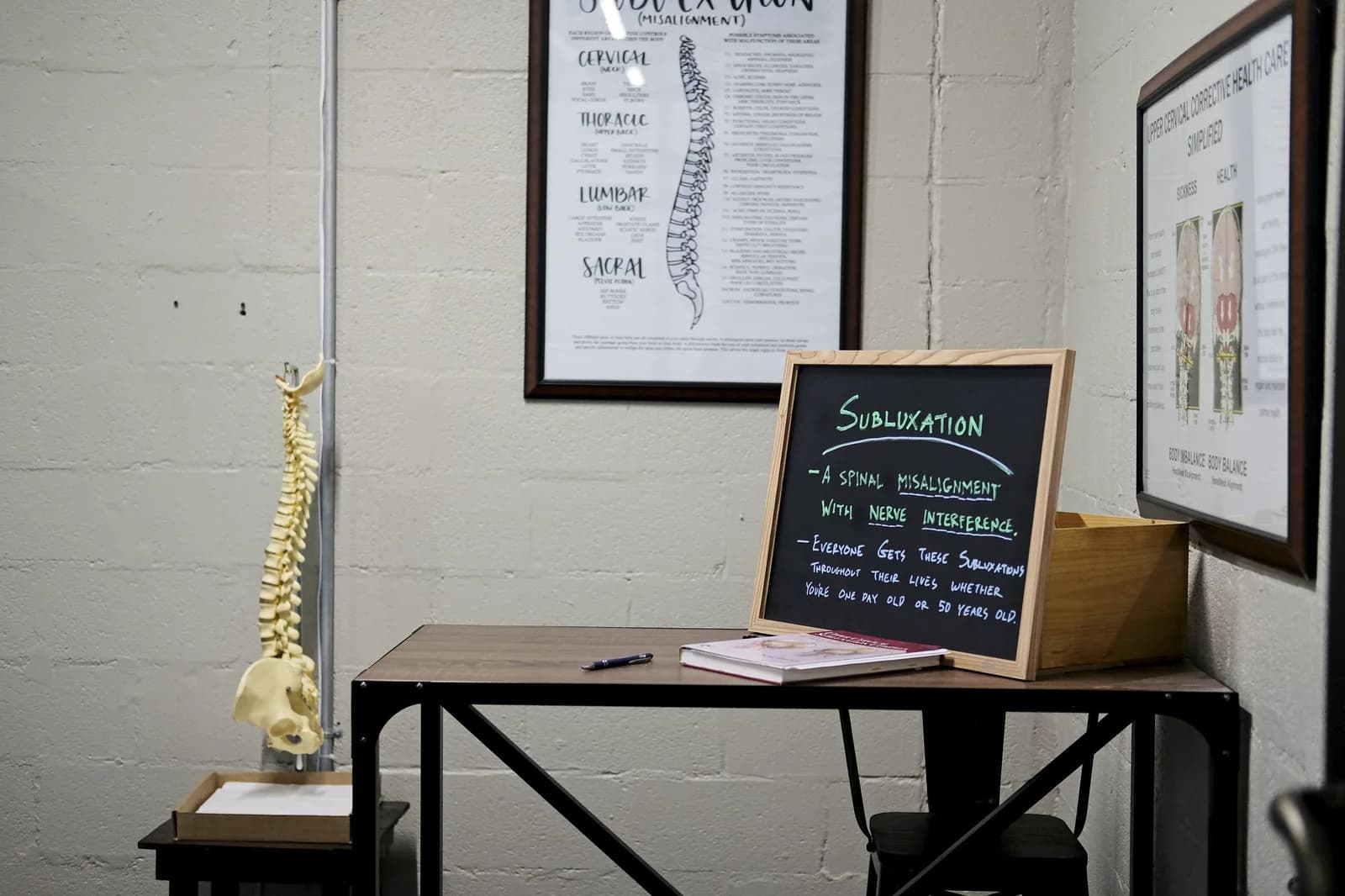
The anatomy that makes people ask
The atlas (C1) and axis (C2) are the top two bones in the neck, and they are built differently from everything below them. The atlas is a ring with no disc above it, carrying the head directly. The axis has a peg that the atlas rotates around, which is where most of your head turning happens.
Three things pass through this small region. The brainstem narrows into the spinal cord there. The vagus nerve, which carries much of the signalling that slows the heart and manages digestion, leaves the skull through an opening just in front of the atlas. The vertebral arteries thread up through side channels in the neck bones and enter the skull through the same opening the spinal cord uses.
So a lot of traffic relevant to heart rate, blood flow to the head, and autonomic regulation passes through a couple of inches of anatomy. That is the honest basis for the question. It is not the same thing as an answer.
What the brainstem is doing in that region
The centres that set your heart rate and the tone of your blood vessels sit in the lower brainstem, inches from the top of your neck. They take in pressure readings from sensors in the neck and chest and adjust output continuously, which is the machinery that is supposed to keep you from greying out when you stand.
In POTS, that loop is not working well. Where the fault sits varies between patients, which is why POTS is better understood as a final common pathway than as one disease. Some presentations look like a small-fibre nerve problem, some like low blood volume, some like an overactive adrenaline response.
That variety is the single most important thing to understand before considering any structural approach. If your presentation is driven by blood volume, no amount of attention to your neck is going to be the lever that matters.
Why position-dependent symptoms raise the question
Some patients describe something more specific than general orthostatic intolerance. Symptoms shift with where their head is, not only with whether they are upright. Turning the head to back the car out of a driveway sets off lightheadedness. Lying with the neck extended over the edge of a pillow brings on nausea. Looking up at a shelf produces a wave of fog.
That pattern is worth examining. It does not prove a mechanical cause, and it can occur for reasons that have nothing to do with joint position, including inner ear problems and vertebral artery flow issues that need medical evaluation rather than adjusting.
It is, though, the kind of history that makes a careful look at the upper neck a reasonable use of your time rather than a long shot.
What the evidence actually is
Here is the part most pages on this topic leave out. The published literature connecting upper cervical chiropractic care to improvement in POTS consists of case reports and small case series, most of it in chiropractic journals. There are no randomized controlled trials.
A case report describes what happened to one patient. It cannot separate the effect of the care from the effect of time passing, from other changes the patient made, from the natural fluctuation of a condition that waxes and wanes on its own, or from the expectation that a new treatment creates. Case reports are how a field notices something worth studying properly. They are not how a field establishes that something works.
So if a clinic tells you that upper cervical care is proven to resolve POTS, they are overstating the literature, and you should weigh everything else they tell you with that in mind. Dr. Porter will not tell you that.
Plausible and proven are different claims
This distinction tends to land well in Huntsville, where a lot of patients spend their working lives distinguishing a promising mechanism from a demonstrated result.
A plausible mechanism is a reason to investigate. The anatomy above is genuinely suggestive, and the overlap between upper neck injury and autonomic symptoms is documented well enough to take seriously. That earns the question a careful examination.
It does not earn a promise, a long prepaid plan, or a claim that your diagnosis is really a neck problem. Those are the places where this subject goes wrong, and they go wrong in a direction that costs patients money and time they often do not have.
How Dr. Porter decides whether your neck is worth examining
He is looking for a handful of things in your history and exam that would make the upper neck a plausible contributor rather than an incidental finding:
- symptoms that began after a concussion, a collision, a fall, or neck surgery
- symptoms that reproducibly change with head position rather than only with being upright
- a history of upper neck pain or restricted movement that predates the autonomic symptoms
- examination findings at the atlas and axis that line up with the side and pattern of your symptoms
And when he does not see it
If your POTS arrived after a virus, you have no injury history, your neck moves well, and the examination is unremarkable, then the upper neck is probably not your lever. He will tell you that at the first visit.
Being told no is a worse business outcome and a better clinical one. Patients managing POTS have usually already spent money on things that did not help, and adding to that list is not a service.