
Written and medically reviewed by Dr. R. S. Porter, D.C. · Doctor of Chiropractic · Last reviewed 2026
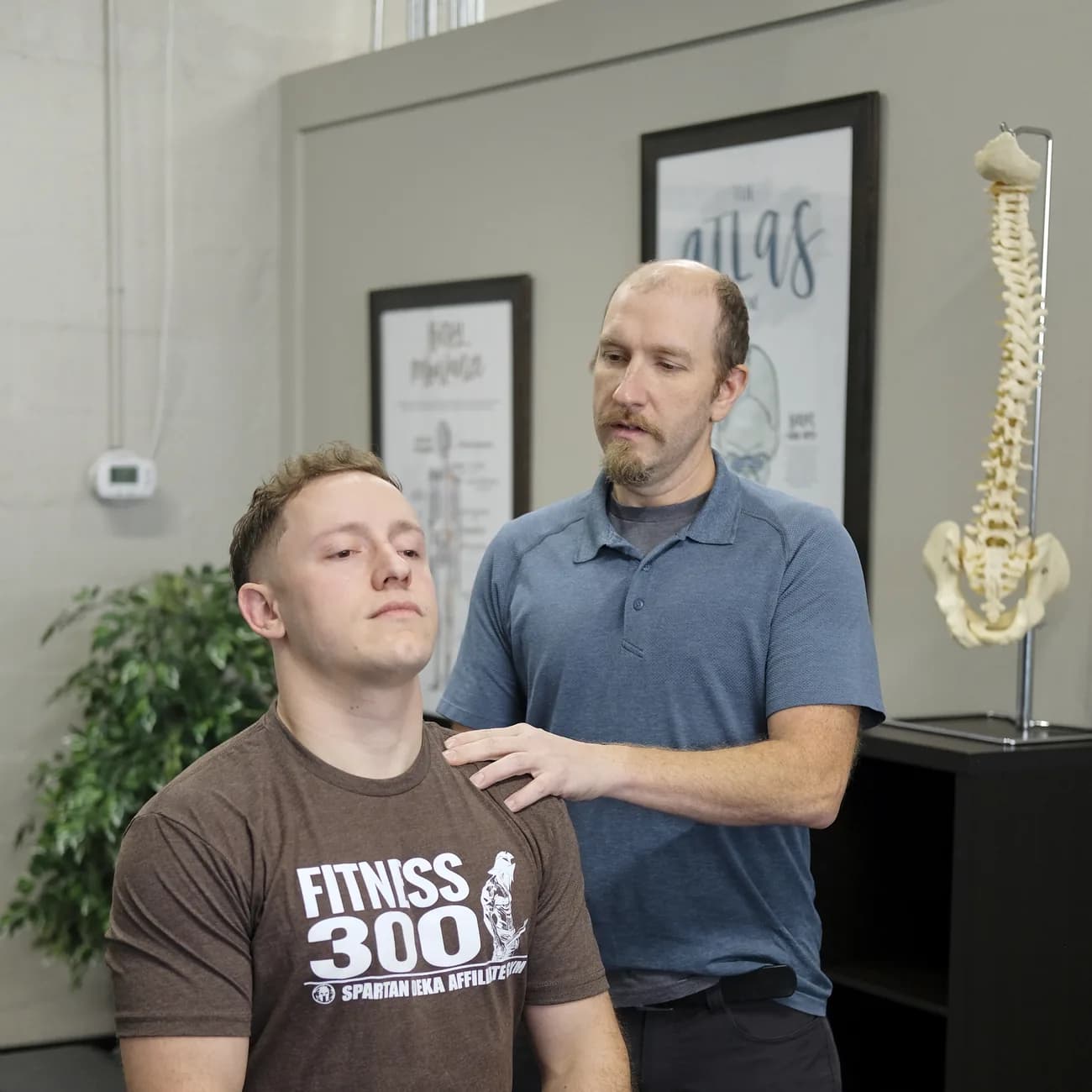
Why desk work creates so much tension
The body is built to move. Desk work asks it to do the opposite. When you stay in one position too long, certain muscles stay active while others stop doing their job well.
The head may drift forward. The shoulders may round. The upper back may stiffen. Over time, that combination can create tension through the neck, shoulders, and upper spine.
It is not just sitting. It is how you sit
Most people do not sit badly on purpose. They adjust based on comfort in the moment. Leaning toward a screen, working from a laptop, cradling the phone, or reaching slightly forward all day can slowly shift posture in a way that overloads the neck and shoulders.
Small misalignments do not seem like much at first. After enough repetition, they start to affect the way joints move and the way muscles carry load.
What symptoms often show up first
For some people it starts as stiffness at the end of the day. Others feel tightness between the shoulder blades, soreness near the top of the shoulders, or headaches that begin in the neck. You might also notice:
- pain when turning the head
- tension after long screen time
- discomfort while driving home from work
- one shoulder feeling tighter than the other
- headaches that show up late in the day
How chiropractic care may help
When desk-related pain is tied to posture, joint restriction, and recurring muscular tension, care looks at how the neck, upper back, shoulders, and posture are functioning together instead of only focusing on the sore area.
We may assess spinal movement, alignment, muscular tension, and the way your daily setup is affecting your body, then work to improve mobility and reduce strain. Chiropractic care may help by:
- improving movement in the neck and upper back
- reducing stiffness from prolonged sitting
- easing shoulder and upper trapezius tension
- supporting better posture mechanics
- helping prevent the same pain from building up as quickly
Changes that help outside the office
Care works best when daily habits improve too. That does not mean your workstation has to be perfect. It just means the body needs less repeated stress. Helpful changes may include:
- taking short movement breaks during the day
- bringing the screen to eye level
- keeping the elbows more relaxed while typing
- changing positions more often
- avoiding long periods of phone use with the head down
Why this pain keeps coming back
Neck and shoulder pain from desk work often returns because the daily pattern never changes. A massage may feel good for a while. Rest over the weekend may help. Then Monday puts the body right back into the same setup.
That is why it helps to look at movement quality, posture, and joint function instead of only chasing symptoms when they flare up. If you are dealing with recurring tightness, soreness, or headaches after work, chiropractic care may help reduce that stress and make long workdays easier on your body.