
Written and medically reviewed by Dr. R. S. Porter, D.C. · Doctor of Chiropractic · Last reviewed 2026
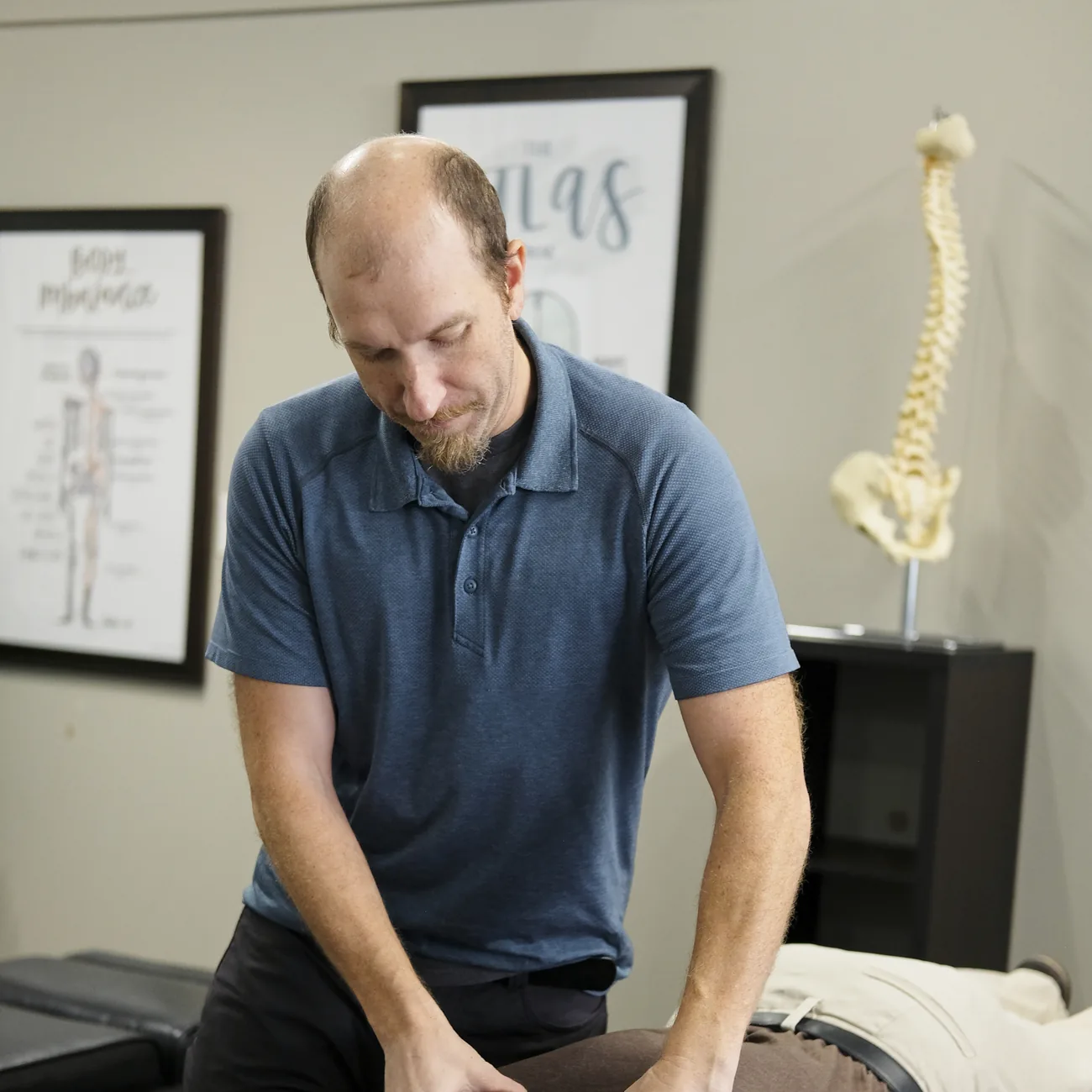
What is upper cervical chiropractic care?
Upper cervical chiropractic care is a specialized branch of chiropractic that focuses on two small but powerful bones at the top of your neck: the atlas (C1) and the axis (C2).
They sit right beneath your skull and surround the lower portion of your brainstem, which helps regulate vital functions. When C1 or C2 shifts out of its proper position, it can put pressure on the area and interfere with signals traveling between your brain and body.
Unlike general chiropractic that adjusts the full spine with manual twisting, upper cervical care uses careful imaging and low-force corrections to realign C1 and C2. The goal is precision, not force.
The atlas, axis, and brainstem connection
Your atlas (C1) holds up your skull and lets you nod your head. The axis (C2) sits directly below and lets you turn your head side to side. Together they give you more range of motion than any other part of your spine.
That flexibility comes with a tradeoff. The upper cervical region has no interlocking discs like the rest of your spine, which makes it more vulnerable. A car accident, sports injury, fall, or years of poor posture can shift it out of alignment.
When that happens, the body often compensates by tilting the head, shifting the shoulders, and rotating the hips. What started as a small misalignment in the neck can create discomfort and dysfunction elsewhere.
Upper cervical vs. traditional chiropractic
Upper cervical chiropractic focuses on the atlas and axis, while traditional chiropractic works across the full spine and joints. The adjustment style differs too: upper cervical care uses a gentle, low-force correction with no cracking or popping, while traditional chiropractic often uses manual manipulation.
Upper cervical visits also tend to be less frequent because the correction holds longer. Both approaches have real value. Traditional chiropractic works well for general musculoskeletal issues, while upper cervical care targets the top of the spine specifically.
What is the Blair technique?
The Blair technique is a specialized upper cervical method developed by Dr. William Blair in 1949. It stands apart because it accounts for the unique bone structure of each individual patient.
Every person has slightly different joint angles at the top of the spine. The Blair method uses precise imaging to map your individual anatomy so the correction fits you, not a generic template. During the adjustment, we deliver a quick, light contact to a specific point on the side of the neck. There is no twisting and no cracking. Dr. R. S. Porter is trained in both the Blair and Toggle Recoil upper cervical techniques.
Conditions that may respond to upper cervical care
Because the upper cervical spine relates closely to the nervous system, people explore upper cervical care for a range of long-standing concerns. Results vary from person to person, and we set honest expectations at your first visit.
- Chronic headaches and migraines
- Persistent neck pain
- Vertigo and dizziness
- Lower back pain
- TMJ discomfort
- Post-concussion symptoms
- General wellness and posture
Signs you might benefit from upper cervical care
You do not need a specific diagnosis to explore upper cervical care. Consider an evaluation if you have chronic headaches that medications only mask, ongoing neck pain or stiffness that started after an accident, or unexplained dizziness, vertigo, or balance problems, especially if standard testing has come back normal.
Jaw tension, persistent fatigue, brain fog, or trouble sleeping can also have an upper cervical component worth checking.
What to expect at your first upper cervical visit
Your first appointment begins with a thorough conversation about your symptoms, history, past injuries, and goals. Next comes the Blair imaging process, precise X-rays taken at calculated angles to map your individual upper cervical anatomy, which we analyze before ever touching your neck.
Once the analysis is complete, we deliver a gentle Blair correction. The contact is quick, light, and precise. You then rest for a short period so your body can begin responding to the new alignment. The visit is unhurried, and you will leave with a clear understanding of your care plan.
Common myths about upper cervical care
Myth: it involves cracking and twisting the neck. The Blair technique involves zero twisting, cracking, or popping. Myth: it is the same as regular chiropractic. It is a subspecialty that requires advanced training and specialized imaging focused on C1 and C2.
Myth: it is not safe for kids or seniors. The gentle, low-force nature makes it one of the safest chiropractic approaches for children and older adults. Myth: you have to go forever. The goal is to get your correction to hold so you need fewer visits, not more, transitioning to periodic checkups over time.
Take the first step toward lasting relief
Upper cervical chiropractic offers a gentle, precise path to addressing chronic concerns at their source rather than only masking symptoms.
At Functional Chiropractic in Huntsville, Alabama, the Blair technique gives you a clear path without drugs, surgery, or forceful neck manipulation. To find out if upper cervical care is right for you, call our Huntsville office at (256) 714-6166 to schedule a consultation.