Written and medically reviewed by Dr. R. S. Porter, D.C. · Doctor of Chiropractic · Last reviewed 2026
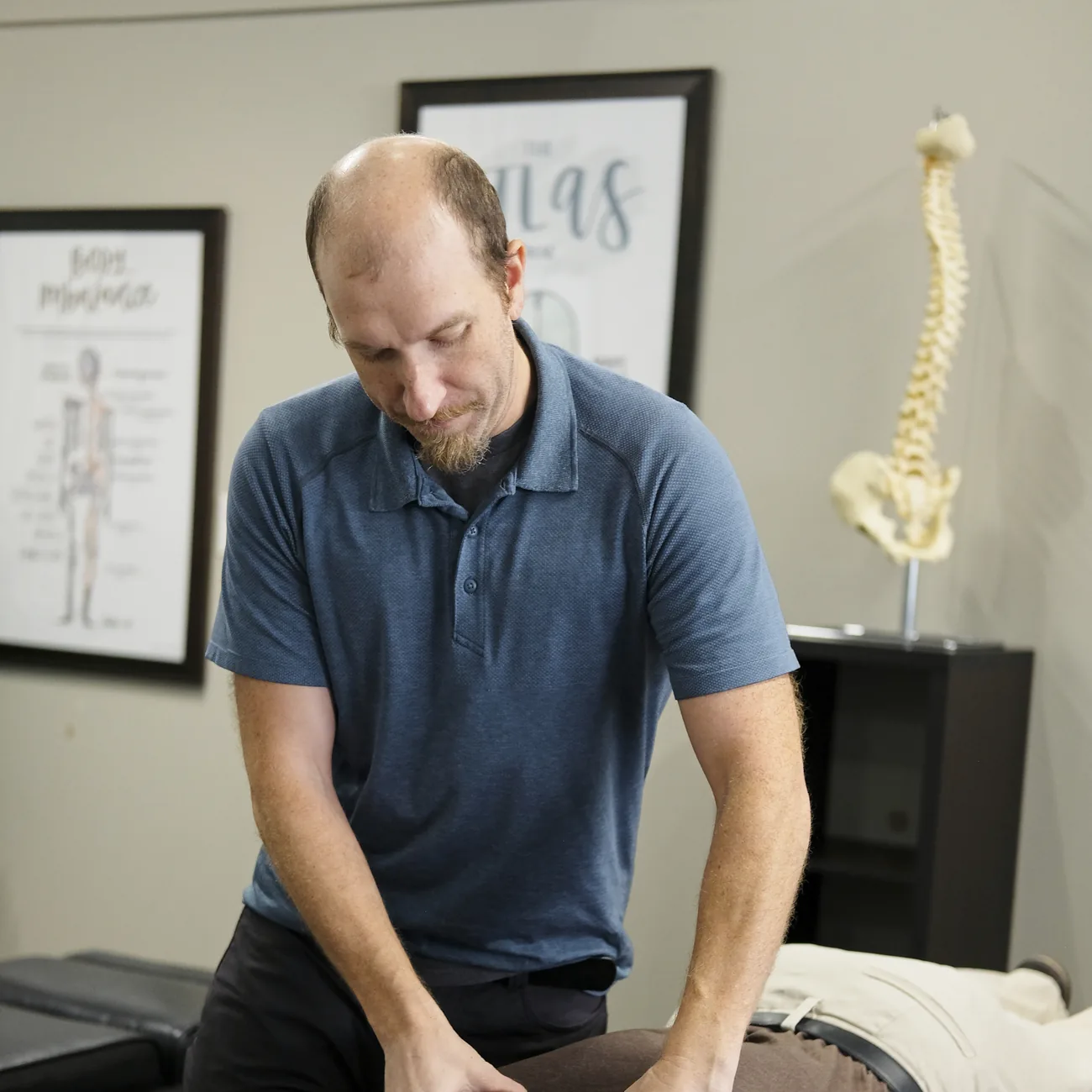
All chiropractic care shares the same goal: restore proper movement to the joints of the spine and reduce irritation on the nerves around them. Where approaches differ is in focus and technique. “Traditional” (or full-spine) chiropractic works across the whole spine and pelvis, often using the familiar hands-on adjustment. Upper cervical chiropractic focuses on the top two vertebrae, the atlas (C1) and axis (C2), where the head meets the neck, using precise, low-force corrections guided by a careful exam and imaging.
Neither is universally “better.” They're different tools. Some people respond best to specific upper cervical work, others do well with full-spine adjusting, and many benefit from a blend of the two. Dr. R. S. Porter is trained in both, gentle Blair and Toggle Recoil upper cervical techniques as well as full-spine care, so the recommendation comes from what your exam shows, not from a one-size approach.
Upper Cervical vs. Traditional / Full-Spine, side by side
| Upper Cervical | Traditional / Full-Spine | |
|---|---|---|
| Primary focus | The atlas & axis (C1–C2) at the base of the skull | The whole spine and pelvis |
| Technique & force | Low-force and precise, no twisting or “cracking” | Hands-on adjustments that may include the familiar release (cavitation) |
| How the adjustment is decided | Specific exam findings and imaging of the upper neck | Exam, motion testing, and palpation across the spine |
| Imaging | Often uses precise upper-cervical X-rays to guide the correction | X-rays used when the history or exam calls for them |
| What it feels like | A gentle, sustained contact, little movement you'll notice | A quick, directed adjustment; often an audible release |
| Frequently chosen for | Headaches, dizziness/balance, long-standing neck issues, POTS-related concerns | General back & neck pain, stiffness, sports & posture strain |
Upper Cervical is often a fit for
- Headaches and migraines
- Dizziness, vertigo, or balance concerns
- Long-standing or post-injury neck problems
- People who prefer no twisting or popping
- Complex cases where a specific, measured approach helps
Traditional / Full-Spine is often a fit for
- Localized back or neck stiffness
- Sports, work, and posture strain
- People who like a traditional hands-on adjustment
- Broad mechanical issues across the spine
The bottom line: You don't have to choose blind. At your first visit we examine, explain what we find, and recommend the approach, upper cervical, full-spine, or both, that fits your body and your goals.