
Written and medically reviewed by Dr. R. S. Porter, D.C., Doctor of Chiropractic
Many neck and back problems can be treated without an operation. At Functional Chiropractic in Huntsville, that means an examination first, then precise upper cervical and full-spine adjustments when they fit the findings. This page covers what that care includes, what it does not, and when you should see a medical doctor instead.

What does non-surgical care mean at this clinic?
"Non-surgical" is a wide label in this city. At a hospital spine program it can mean injections, medications, or physical therapy. At some chiropractic offices it can mean spinal decompression tables or other in-office machines. Those can be reasonable options for the right person. They are not what this clinic does.
Functional Chiropractic is an upper cervical and full-spine practice on Memorial Parkway in south Huntsville. Dr. R. S. Porter, D.C., uses gentle Blair and Toggle Recoil techniques rather than forceful twisting of the neck, and full-spine adjusting when the examination calls for it. He also holds NASM credentials in corrective exercise and sports performance, which he uses when movement work belongs in the plan.
The aim is conservative care: restore motion in restricted joints, ease irritation around nearby nerves, and give the body a chance to settle without an operation. Nothing is fused, and no hardware is placed. That also means this is not a treatment that changes the anatomy the way surgery does, and it is not a promise that every disc or nerve problem will resolve.
If you want a closer look at the method itself, start with our page on upper cervical chiropractic.
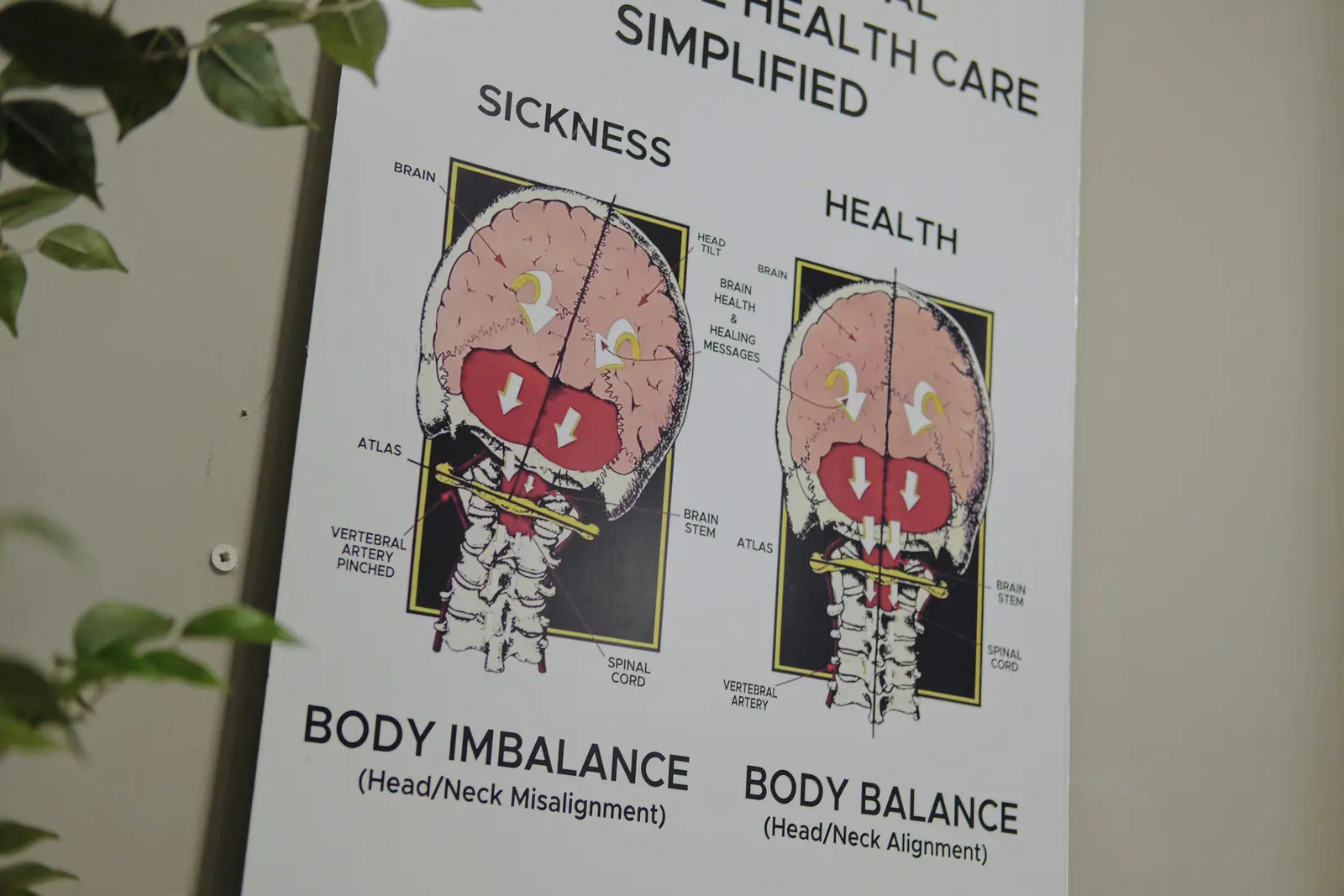
Who is a good candidate for this kind of care?
This work is a fit for many people with mechanical neck or back pain: stiffness, aching that builds through a workday, pain that flares with sitting or looking down, or recurring episodes that never quite stay gone. Some people come in after a surgeon has mentioned an elective procedure and they want a conservative opinion first. Others have already tried rest, medication, or therapy and still do not feel right.
People with neck symptoms can also have arm pain, tingling, or numbness. In those cases a pinched nerve may be involved. The American Academy of Orthopaedic Surgeons notes that, in most cases, cervical radiculopathy (a pinched nerve in the neck) responds well to conservative treatment and does not require surgery (AAOS OrthoInfo). That is a population-level statement, not a diagnosis. An examination is what tells you whether conservative care is appropriate in your case, or whether you need a medical workup first.
For condition-specific detail, see our pages for a neck pain chiropractor in Huntsville and a back pain chiropractor in Huntsville. This page is not a substitute for those. It is the overview of the conservative approach behind them.
You are not a candidate for an adjustment-first plan if red-flag findings are present. In that situation the right next step is medical care, not a trial of chiropractic visits.
What happens before anyone is adjusted?
We do not adjust you on the first visit. That is deliberate. The first appointment is a consultation plus a neurological, orthopedic, and postural examination. For most adult patients, Blair analysis imaging of the upper neck is used when it will actually direct the correction.
If the findings point to something conservative care should not be handling, we will say so and help you get to the right kind of clinician. If they support a trial of care, the plan is specific to what the exam showed, not a fixed routine. Re-checks at later visits look at whether the correction is holding, not only at whether you feel better that day.
The clinic is cash-based and self-pay. We do not bill insurance. HSA and FSA funds are welcome, and pricing is quoted up front. Same-day appointments are often available. Call (256) 714-6166 or book online, and you will find us at 8400 Memorial Parkway SW, Huntsville, AL 35802.
When should you see a medical doctor or a surgeon instead?
Most back pain improves without an operation. The American Academy of Orthopaedic Surgeons says that, in most cases, low back pain goes away on its own within a few weeks (AAOS OrthoInfo). The National Institute of Arthritis and Musculoskeletal and Skin Diseases similarly notes that most people find relief within six weeks, and that surgery may be considered if other treatments have not helped (NIAMS).
"Most" is not "all." Some presentations need a medical doctor or a surgeon from the start. Seek emergency or urgent medical care, do not wait for a chiropractic appointment, if you have:
- New loss of bladder or bowel control, or numbness in the saddle region
- Weakness that is getting worse, such as a foot that has started to drop, a leg that is giving way, or an arm that is rapidly losing strength
- Pain after a fall, collision, or other significant trauma
- Back or neck pain with fever, or with weight loss you did not intend
- Trouble urinating along with back pain
Those signs are consistent with the red flags NIAMS tells patients to take seriously, including trouble urinating, weakness or numbness in the legs, fever, unintended weight loss, and pain after a fall or injury (NIAMS).
There is a second group that is not an emergency, but is also not a reason to keep adjusting and hoping. Radiating nerve pain or progressive neurological symptoms that have not improved after a genuine course of conservative care deserve a surgical or medical consultation. For a side-by-side look at that decision in back pain, read our guide on chiropractic vs surgery for back pain.